
Name of the curriculum: Practical Course in Floristry and Floral Arrangements
Target group: Adult learners aged 18 and over
Study period: 06.10–31.05
Frequency of studies: Once a week
Study volume: 104 academic hours
Form of study: Contact learning, theory and practical work
Level of study: Beginner and intermediate
Previous experience: Not required
Language of instruction: Russian
AIM OF THE CURRICULUM
The aim of the course is to provide adult learners with practical and accessible knowledge of flower handling, flower care and the creation of floral arrangements.
The course focuses on flowers, plant materials, colours, shapes and composition. A significant part of the training is carried out through practical activities.
The course is suitable both for beginners and for learners who wish to improve their existing skills in working with flowers.
LEARNING OUTCOMES
Upon completion of the course, the learner:
- identifies common cut flowers and cut foliage;
- is able to properly prepare flowers for work and arrange them appropriately;
- knows the basic principles of flower care and storage;
- is able to use basic floristry tools;
- understands the basic principles of composition when creating floral arrangements and bouquets;
- is able to use colours and different plant materials to create a harmonious composition;
- is able to create simple bouquets and floral arrangements;
- is able to select the placement of flowers according to shape, size and colour;
- is able to evaluate their own floral arrangement and make the necessary adjustments;
- follows occupational safety and hygiene principles during practical work.
1. COURSE CONTENT
Module 1. Flowers and Plant Materials
Content:
- basic types of cut flowers;
- cut foliage and decorative plants;
- characteristics of flowers and their uses;
- seasonal flowers;
- assessing the quality of flowers;
- preparing plant materials for work.
Practical work:
- cleaning and preparing flowers;
- cutting stems;
- sorting flowers;
- storing plant materials.
Module 2. Flower Care and Storage
Content:
- basic principles of cut flower care;
- the effect of water and temperature on flowers;
- methods for extending the vase life of flowers;
- care requirements of different types of flowers;
- common mistakes in flower care.
Practical work:
- preparing flowers for a vase;
- practising different flower care techniques;
- arranging and storing flowers.
Module 3. Basic Principles of Composition
Content:
- form;
- proportion;
- balance;
- rhythm;
- symmetry and asymmetry;
- focal point;
- flower height and placement;
- overall unity of the composition.
Practical work:
- creating simple composition exercises;
- working with different forms;
- changing flower placement and analysing the result.
Module 4. Colour in Floristry
Content:
- principles of the colour wheel;
- warm and cool tones;
- colour harmony;
- contrasting colour combinations;
- monochromatic and multicolour compositions;
- the effect of colour on the overall impression of a floral arrangement.
Practical work:
- experimenting with different colour combinations;
- creating a colour palette;
- creating a floral arrangement based on a given colour scheme.
Module 5. Bouquet Making
Content:
- bouquet structure;
- flower selection and compatibility;
- spiral technique;
- bouquet shape and proportions;
- securing and finishing the stems;
- bouquet care.
Practical work:
- creating a simple bouquet;
- creating a spiral bouquet;
- combining different flowers and foliage;
- finishing the completed bouquet.
Module 6. Floral Arrangements
Content:
- basic types of floral arrangements;
- low and tall arrangements;
- placing flowers in different containers;
- floral accessories and supporting materials;
- stability of the composition;
- finishing the work.
Practical work:
- creating a simple floral arrangement;
- using different containers;
- combining flowers and foliage;
- evaluating and improving the finished work.
Module 7. Seasonal Floral Arrangements
Content:
- using seasonal flowers;
- spring floral arrangements;
- summer floral arrangements;
- autumn floral arrangements;
- winter floral arrangements;
- using natural materials.
Practical work:
- creating a floral arrangement suitable for the season;
- using different seasonal materials;
- combining colours and forms into a harmonious whole.
Module 8. Creative Practice
Content:
- developing a personal idea;
- selecting flowers and materials;
- planning the composition;
- sequencing the stages of work;
- independent execution of the work;
- analysing the finished work.
Practical work:
The learner independently creates a floral arrangement or bouquet using the knowledge and techniques acquired during the course.

2. TEACHING METHODS
The training is primarily based on practical activities.
The following methods are used:
- short theoretical explanations;
- teacher demonstrations;
- practical exercises;
- individual guidance;
- independent practical work;
- observation and analysis of completed works.
3. LEARNING ENVIRONMENT
The training takes place in a suitable learning and working environment equipped with the necessary work surfaces, chairs, lighting, as well as basic floristry tools and materials.
During practical sessions, various cut flowers, cut foliage and other plant materials are used according to the season and the objectives of the training.
4. REQUIREMENTS FOR COMMENCING STUDIES
A person aged 18 or older may enrol in the course. No previous experience in floristry or working with flowers is required.
5. COMPLETION OF STUDIES
The course is considered completed when the learner has participated in the training in accordance with the course requirements and has taken part in the practical activities.
No professional qualification examination is held upon completion of the course.
6. CERTIFICATION OF COURSE COMPLETION
Upon successful completion of the course, the learner will receive a certificate confirming completion of the course, participation in the training and acquisition of the knowledge and practical skills provided by the curriculum in the field of flowers and floral arrangements.
The certificate shall indicate the name of the course, the learner’s name, the study period and the total study volume.
7. COURSE ORGANISATION
The training takes place from 06.10 to 31.05.
Classes are held once a week. One class lasts 3 academic hours, with a total of 104 academic hours.
The exact number of weeks and study hours depends on the calendar of the study period.
8. TRAINER
The training is provided by a trainer with practical experience in floristry.
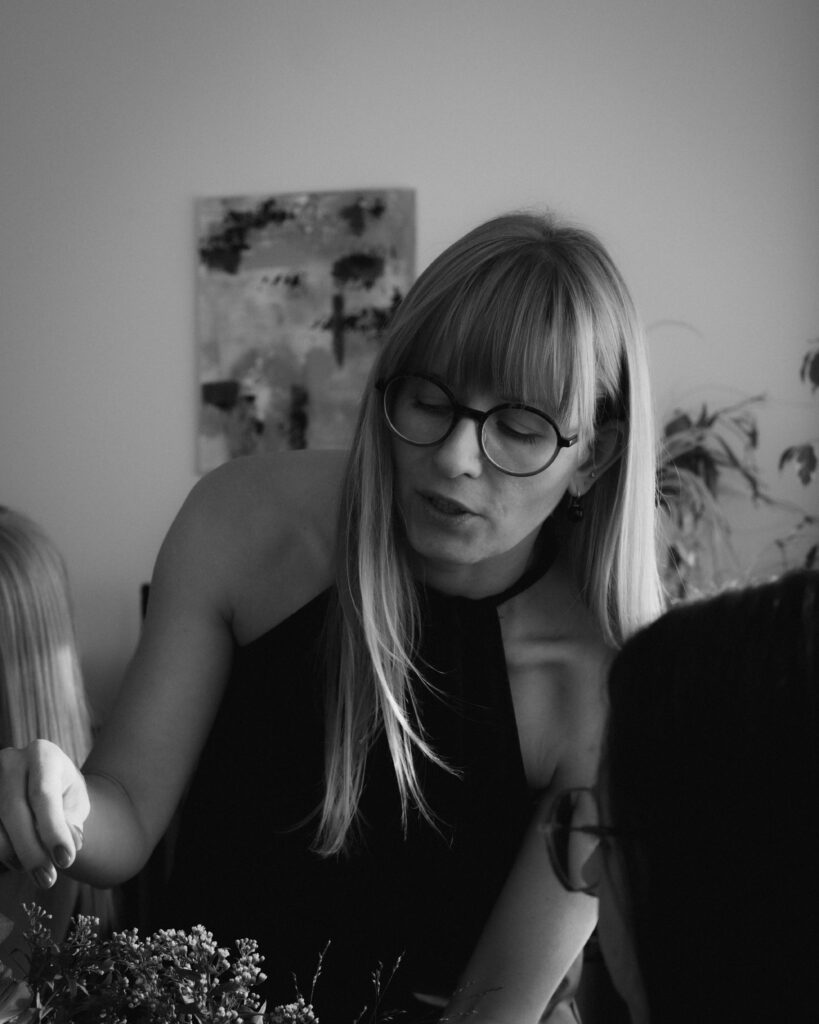
Jekaterina Sipari is the founder and owner of Chandelle Studio and the Jekaterina Sipari Design brand since 2014.
She is a qualified florist and decorator with many years of practical and teaching experience.
Jekaterina Sipari holds a higher education degree in Environmental Engineering, as well as qualifications in pedagogy, economics and business management.
Her professional experience includes practical work in floristry and decoration, the creation of original floral compositions, and delivering practical training for adult learners.
Contact person:
Jekaterina Sipari Design OÜ
Chandelle Studio
E-mail: info@chandelle.ee
Phone.: 5262 804
To register for the course, call +372 526 2804, email info@chandelle.ee, or fill in the contact form.